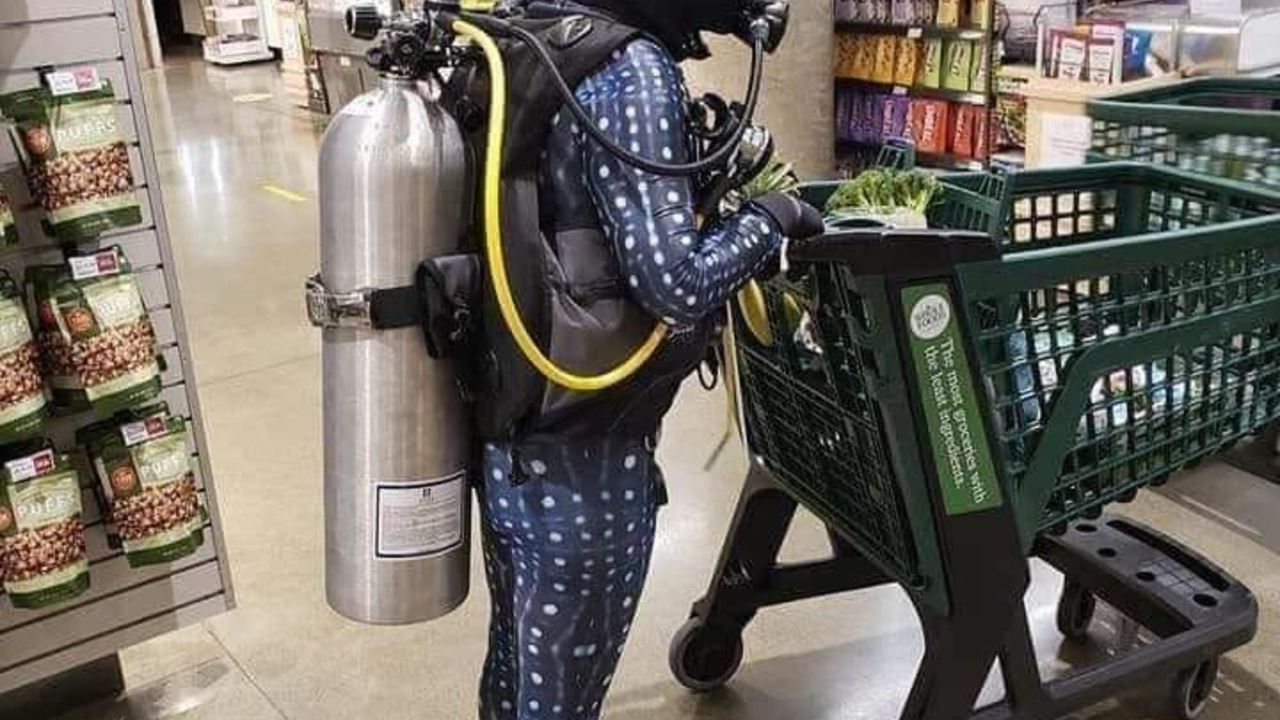
Ok, let’s start by talking about what error-proofing really is. According to the American Society for Quality, “Mistake proofing, or its Japanese equivalent poka-yoke (pronounced PO-ka yo-KAY), is the use of any automatic device or method that either makes it impossible for an error to occur or makes the error immediately obvious once it has occurred.”
The best way to do this is to eliminate the human from the equation, but automation can make errors too. So let’s just understand that a perfect #process is rare, but we can do what we can to reduce the likelihood of errors.
Of course, whenever possible, we should absolutely try to design controls and automation into our processes to completely eliminate the possibility of a human making an error. But sometimes, the best we can do is more error discouraging than error proofing.
With this world pandemic upon us, I’ve noticed some things. We humans are just not very good at isolation and “social distancing”. Most of us can understand it conceptually and intellectually. But putting it into practice is proving more challenging than one might expect. I live in Florida, and our humans (both local and tourists) have really struggled to follow the good practices suggested to us as “guidelines”. Rather, we pretty much had to have events all out canceled, theme parks and businesses closed and beaches roped off before the streets and public spaces actually started to clear.
But, I’ve also seen some pretty good ideas implemented quickly in order to push us humans along the journey of learning about social distancing. Some of these are error discouraging, but they do improve our chances of complying with the guidelines.
– APP only purchases – all purchases are done via an APP eliminating all contact for transactions (typically paired with delivery or curbside pickup)
– At essential retail and grocery stores – 6 foot tape lines on the floor where people queue up, one way aisles to allow for easier spacing between people, and no touch transactions – wave and go – no swipe, no chip – this isn’t exactly new, but for all you old schoolers out there, it’s time to get with the program.
– At home – no touch deliveries (no signature) – I recently had this perk for a delivery of adult beverages!
– At hospitals and other essential services – free parking – a complete elimination of fees so there is no contact with a booth attendant or pay kiosk.
– At our local coffee shop – chairs set 6 feet apart or furniture removed altogether so people can’t “hang out” or congregate.
– At a local rum distillery – walk up purchase of hand sanitizer – they’ve temporarily closed their tasting room and tours, but are still providing a safe purchase experience for a much needed product.
– At pizza joints – no contact packaging of pizza from oven to box.
– Drive through everything, even Coronavirus testing!
– Online medical care – this has been mostly a pipe dream for a long time – and now we’re seeing this come quickly into practice
Now, with all of these changes we’ve been able to make to our daily #processes, what does that tell us about waste? Many of these changes are a result of our having to look for “non-essential” steps and waste, and eliminate those steps. So, is “non-essential” akin to “non-value added” in lean manufacturing? Sometimes, yes!
Where we have determined that a thing is “non-essential”, what does that mean? Does it mean if we don’t need it now, we don’t need it ever? In some cases, yes. And I’m really enjoying the fact that we, as a society, are starting to recognize this. We’re all thinking #lean these days. But is everything that is “non-essential” also “non-value added”?
My answer would be no. There are things we can pause for a moment, while the world recovers from this terrible virus. But there are lots of things that add value to our quality of life – like theme parks and restaurants and coffee shops and movie theaters and beaches and museums and skating rinks and concerts and festivals and mass transportation and the list goes on and on.
But, we can always be mindful of what we might be learning through this crisis. Where we can remove unnecessary steps or put in place measures to reduce our risk, we may be able to make these changes permanent in the interest of better #processes. Where something adds value, we should keep it. If it doesn’t, we should consider eliminating it.